
Glasses that tell blind and low-vision people where hazards are, through touch.
A camera on the frame reads what is ahead. Small motors in the frame point to it. No voice unless something is urgent.
In daily use by 8 people in San Jose since 2025.
How it works
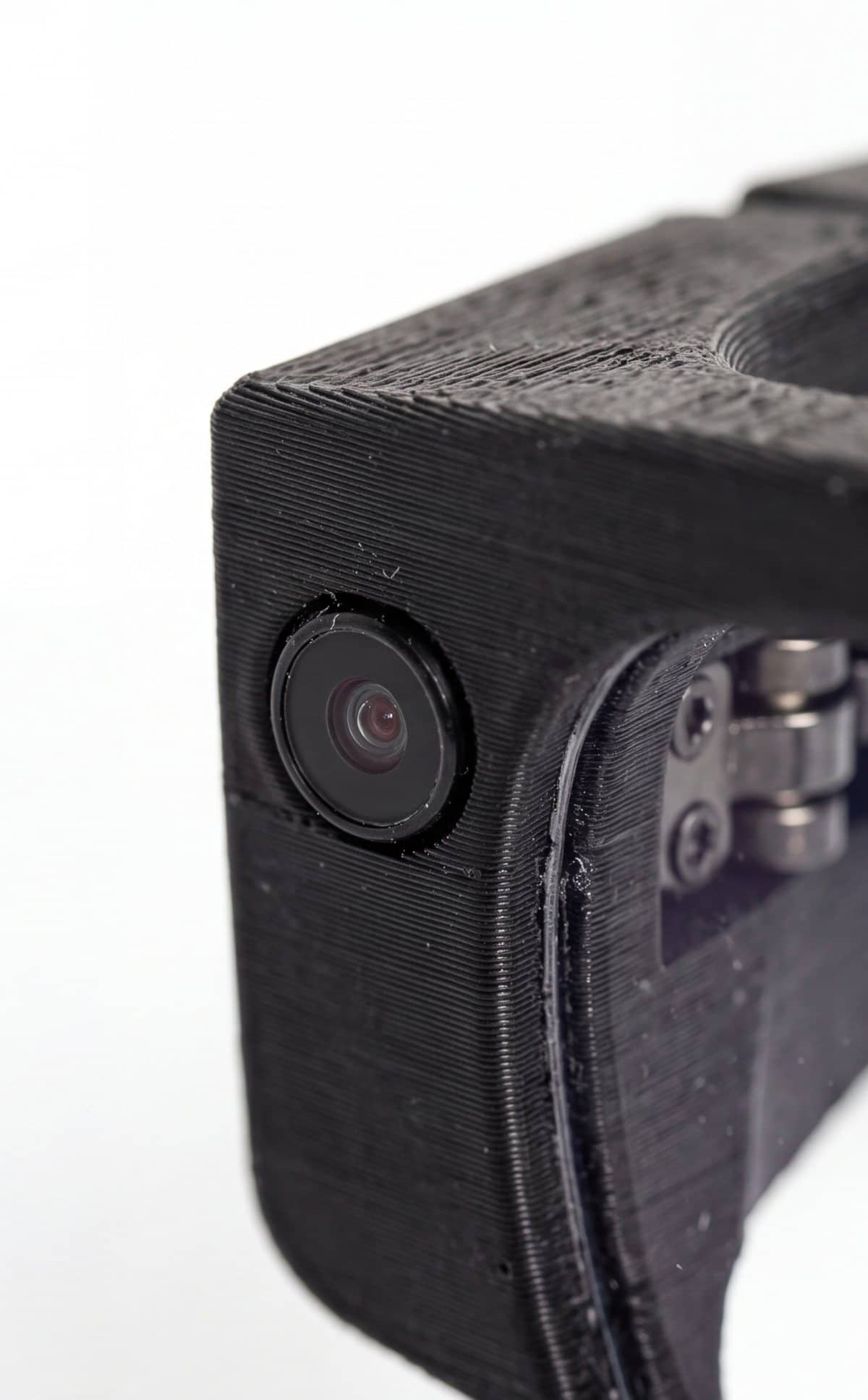
It looks.
The camera on the temple scores everything ahead by distance, movement, and direction. Under 300 milliseconds from camera to skin.
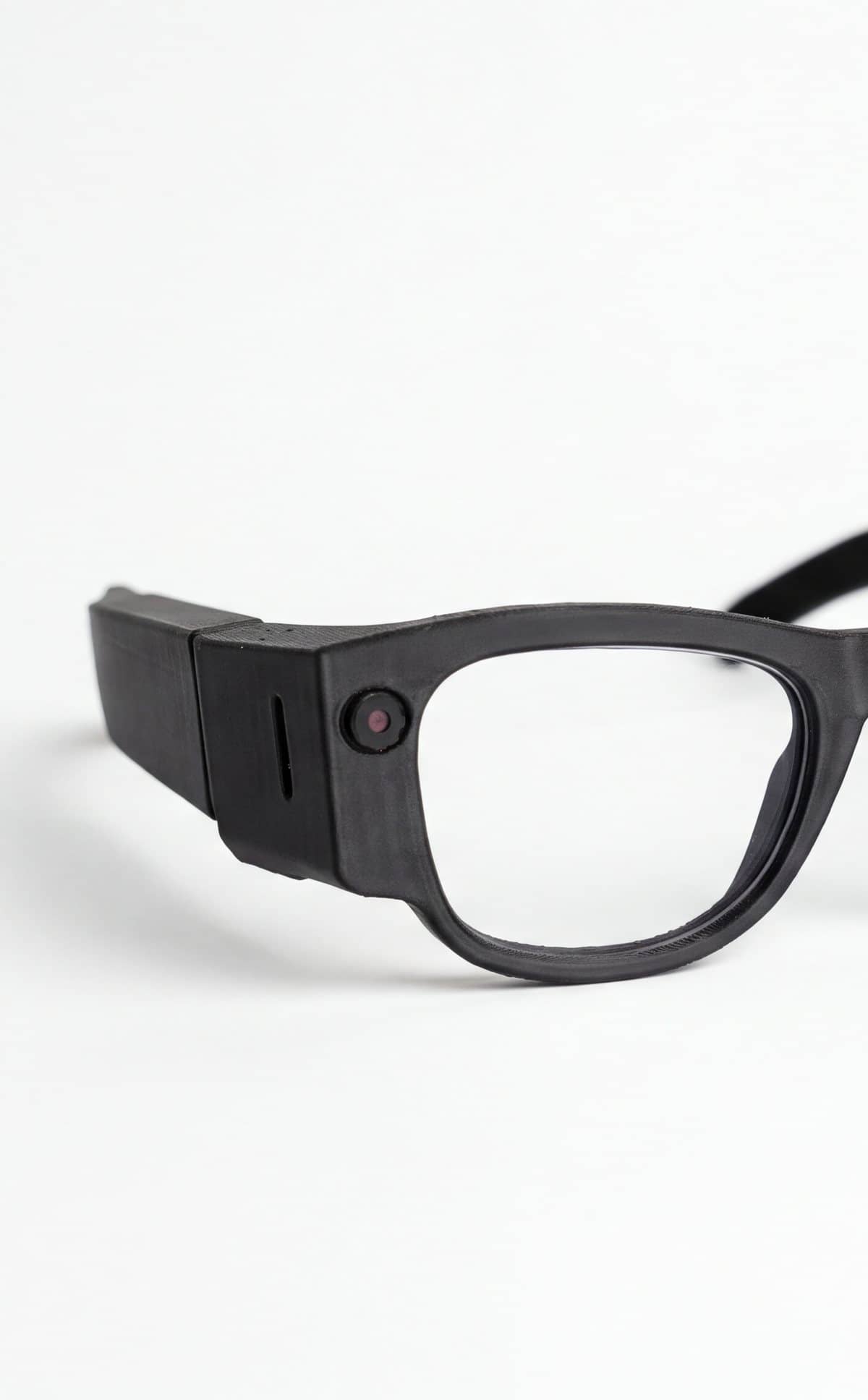
It points.
An array of small vibration motors inside the frame pulses toward the hazard, across up to 270 degrees. Closer means stronger. The wearer feels where, not just that something is there.
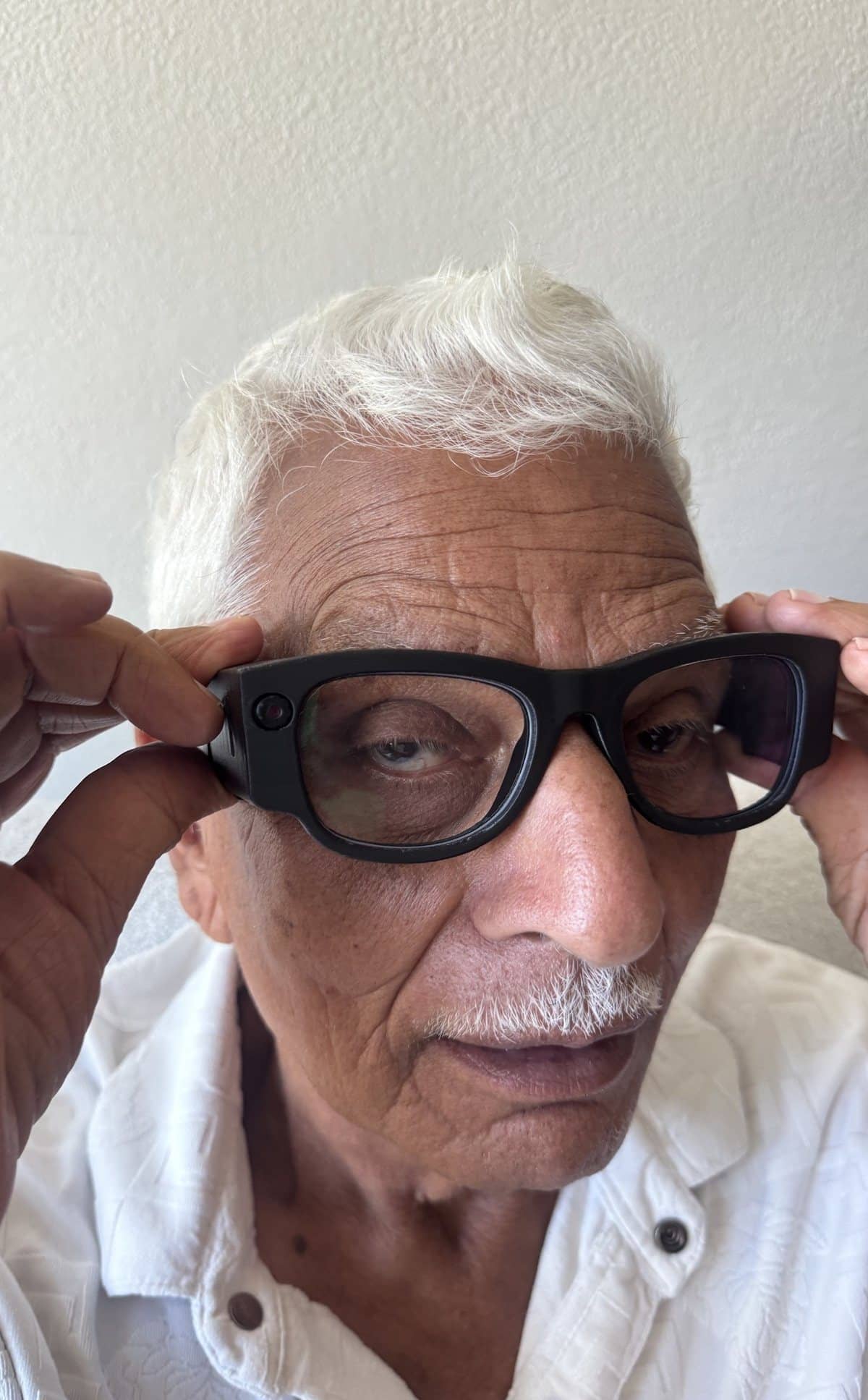
It stays quiet.
No audio unless the wearer asks a question or something is about to hit them. If they are hurt, SOS can reach a loved one.
Specs
Under 300ms
camera to skin, measured
8 hour battery
a full day of walking
Runs on the glasses
works without a phone or a connection
Optional phone pairing
adds SOS and road conditions
Privacy
What it does not do.
Faces
No facial recognition. It scores shapes, distance, and motion. It does not identify people.
Video
No video stored. Frames are processed on the glasses and discarded. Nothing is uploaded by default.
Connection
Works without a phone or an internet connection.
Phone app
Pairing with the phone app is optional. It adds SOS and road conditions and nothing else.
Happy to walk your compliance team through it.
Pilot program
5 sites. Winter 2026.
Terms
- Pairs per site
- 2 to 5
- First month
- Free
- From month two
- $50 per pair per month
- Length
- 90 days
- At the end
- Keep them at $500 per pair, pilot fees credited. Or send them back.
- Ships
- First week of December 2026
What you get
- Pairs fitted for your wearers.
- Setup and training for your O&M staff.
- A direct line to the person who built them.
- A weekly check-in.
- Everything your wearers tell us goes straight into the next build.
What we need
- An O&M instructor or program lead as the point of contact.
- 2 to 5 wearers.
- A signed pilot agreement.
Recognition
- Startup World Cup Regional Champion 2026
- YC S26 interview
- Published research
- Patent pending
- Built in San Jose